Kyoto Pre-Wedding Locations: Can You Shoot at Kiyomizu-dera or Fushimi Inari?
The short answer
Kyoto’s most famous sites do not accept pre-wedding shoots.
Kiyomizu-dera, Fushimi Inari Taisha, Heian Jingu and the Kyoto Imperial Palace grounds all say in their official guidance that they do not accept commercial or wedding photography. The Arashiyama bamboo grove and the city parks need a permit in advance.
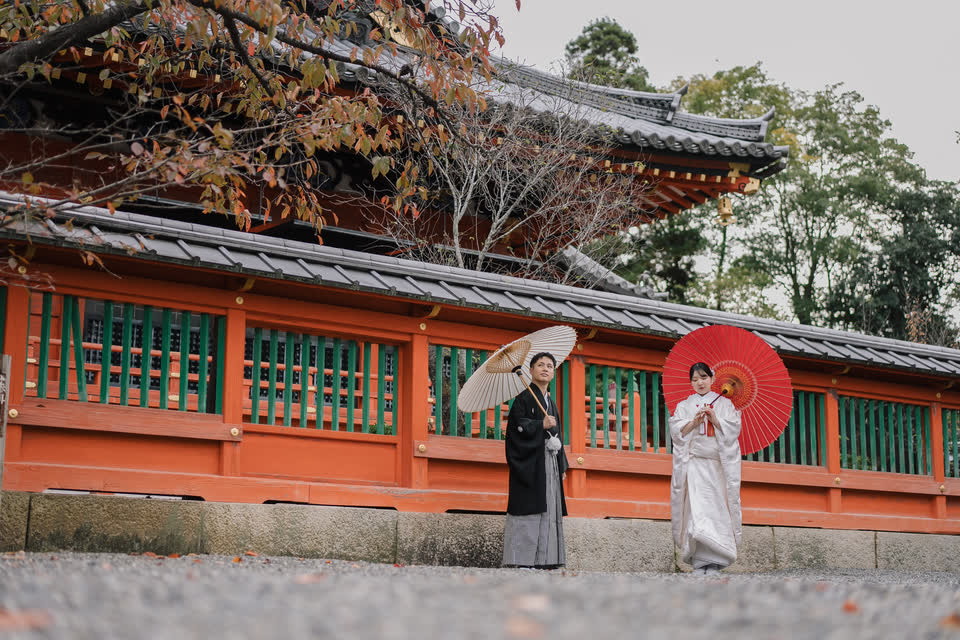
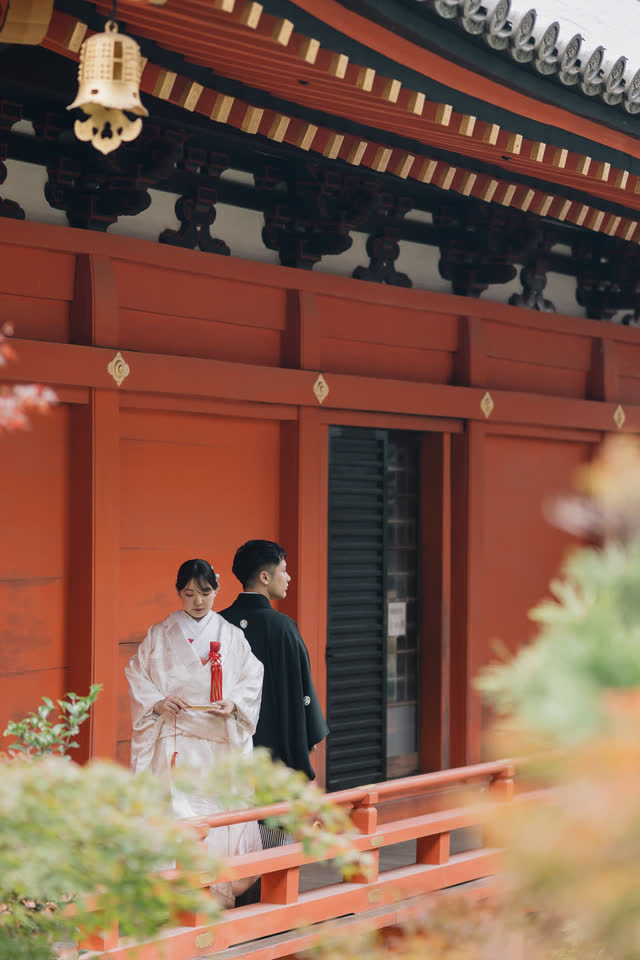
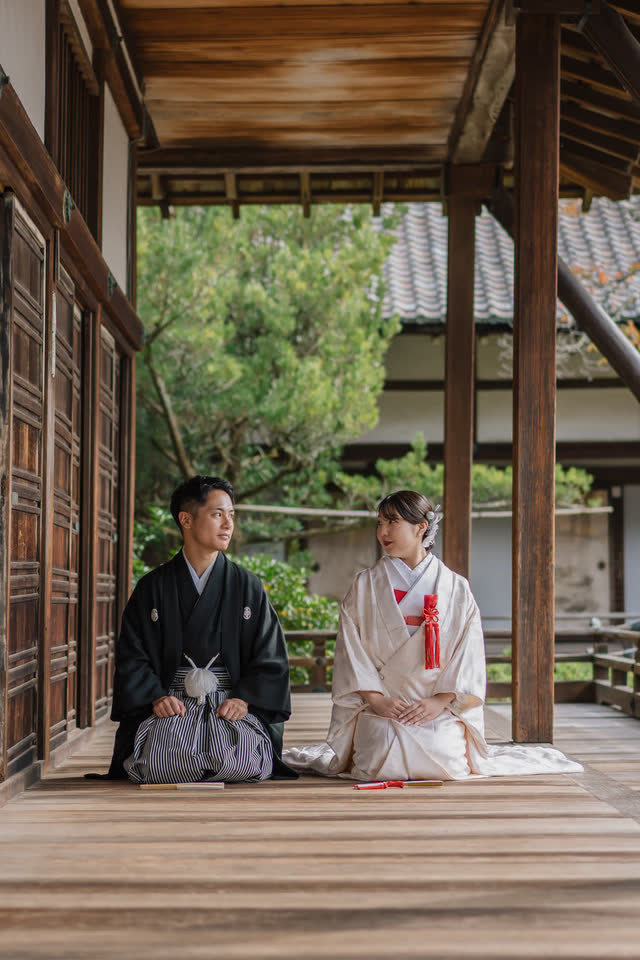
Kyoto pre-wedding photographs happen at shrines and temples that accept photography applications. We check them against your date and outfit, and most location fees are included in the package. See Kyoto pre-wedding packages and prices.
Which famous Kyoto spots allow a pre-wedding shoot?
This is summarised from each site’s official guidance, checked in October 2026. Rules can change, so we confirm again when you book.
| Place | Pre-wedding shoot | What the official guidance says |
|---|---|---|
| Kiyomizu-dera | Not accepted | Wedding, cosplay and model shoots are not allowed, and commercial photography is declined |
| Fushimi Inari Taisha | Not accepted | Commercial photography is prohibited, and so is walking the grounds in a wedding dress |
| Heian Jingu | Not accepted | Photography in the grounds for business purposes is firmly declined |
| Kyoto Imperial Palace grounds | Not accepted | Commercial shoots with a hired photographer, and shoots in costume such as pre-wedding photos, are asked to be avoided |
| Arashiyama bamboo lane | Permit needed | A public road: apply in advance to Ukyo Police Station for a road-use permit |
| Arashiyama bamboo path | Permit needed | City land: commercial shoots need prior approval, accepted only for June to September and January to February, 9:00 to 17:00 |
| Ninenzaka and Sannenzaka | Permit needed | Public roads: photography on the road needs a road-use permit from the local police station |
| Kyoto city parks, such as Maruyama Park | Permit needed | Wedding shoots need a permit; still photography costs ¥4,600 an hour |
| Kamigamo Shrine | Conditional | Photography in the grounds needs prior permission; pre-wedding shoots are limited to the shrine’s own plans |
Four places that say no
- Kiyomizu-dera: the temple’s guidance says wedding, cosplay and model shoots are not allowed. Tripods, monopods and drones are not allowed either.
- Fushimi Inari Taisha: commercial photography is prohibited, and so is walking the grounds in a wedding dress. Blocking the narrow paths to take photographs is prohibited too.
- Heian Jingu: photography in the grounds for business purposes is firmly declined.
- Kyoto Imperial Palace grounds: the Ministry of the Environment’s current guidance asks visitors to avoid commercial shoots with a hired or freelance photographer, and shoots in costume such as pre-wedding photos.
You can visit all four as sightseers. What falls outside the rules is bringing a photographer, or a wedding dress or kimono, to shoot there.
Arashiyama bamboo grove: two paths, two sets of rules
What most people call the bamboo grove is really two paths, and their rules differ.
- The bamboo lane (a public road): Kyoto City states that it is a public road. To photograph there, apply in advance to Ukyo Police Station for a road-use permit.
- The bamboo path (city land): commercial shoots apply between one month and seven days before the date. Applications are accepted only for June to September and January to February, and the path is open from 9:00 to 17:00.
- Cherry blossom and maple seasons: from March to May and October to December, the city asks that no shoots be applied for on the path.
Streets such as Ninenzaka and Sannenzaka are public roads too. Kyoto City’s guidance is that photography on a road needs a road-use permit from the local police station.
Whether a small shoot also needs a permit is not stated officially, so we check with the police and the site managers before we plan. How permits work across Japan is in our photography permits guide.
Gion: three things to respect
Residents, teahouses and the geiko association of southern Gion have published a message, shared by Kyoto Prefecture, asking visitors to respect three things.
- Do not enter private property. Going anywhere other than the shops and the road without permission may be a criminal offence.
- Do not stop and block the road. Standing in the road to take photographs can bring a fine of up to ¥50,000 under the Road Traffic Act.
- Do not photograph geiko or maiko without consent, and do not stop or follow them.
Gion’s streets are narrow and busy. When we photograph in Gion, we follow the same three rules.
Parks, shrines and temples
- Kyoto city parks: the city’s photography standards say wedding shoots need a permit. Still photography costs ¥4,600 an hour, including set-up time. For Maruyama Park, applications go to the park management office.
- Parks run by Kyoto Prefecture, such as Arashiyama Park: the procedure is different from the city’s.
- Kamigamo Shrine: photography in the grounds needs prior permission from the shrine office. The shrine’s wedding site says pre-wedding shoots are limited to its own plans.
- Shimogamo Shrine: the wedding site covers photography for couples marrying at the shrine. It does not say whether pre-wedding shoots alone are accepted.
- Higashi Honganji: personal souvenir photos are fine. Photography for profit needs permission from the temple’s denomination in advance.
So where do Kyoto pre-wedding photos happen?
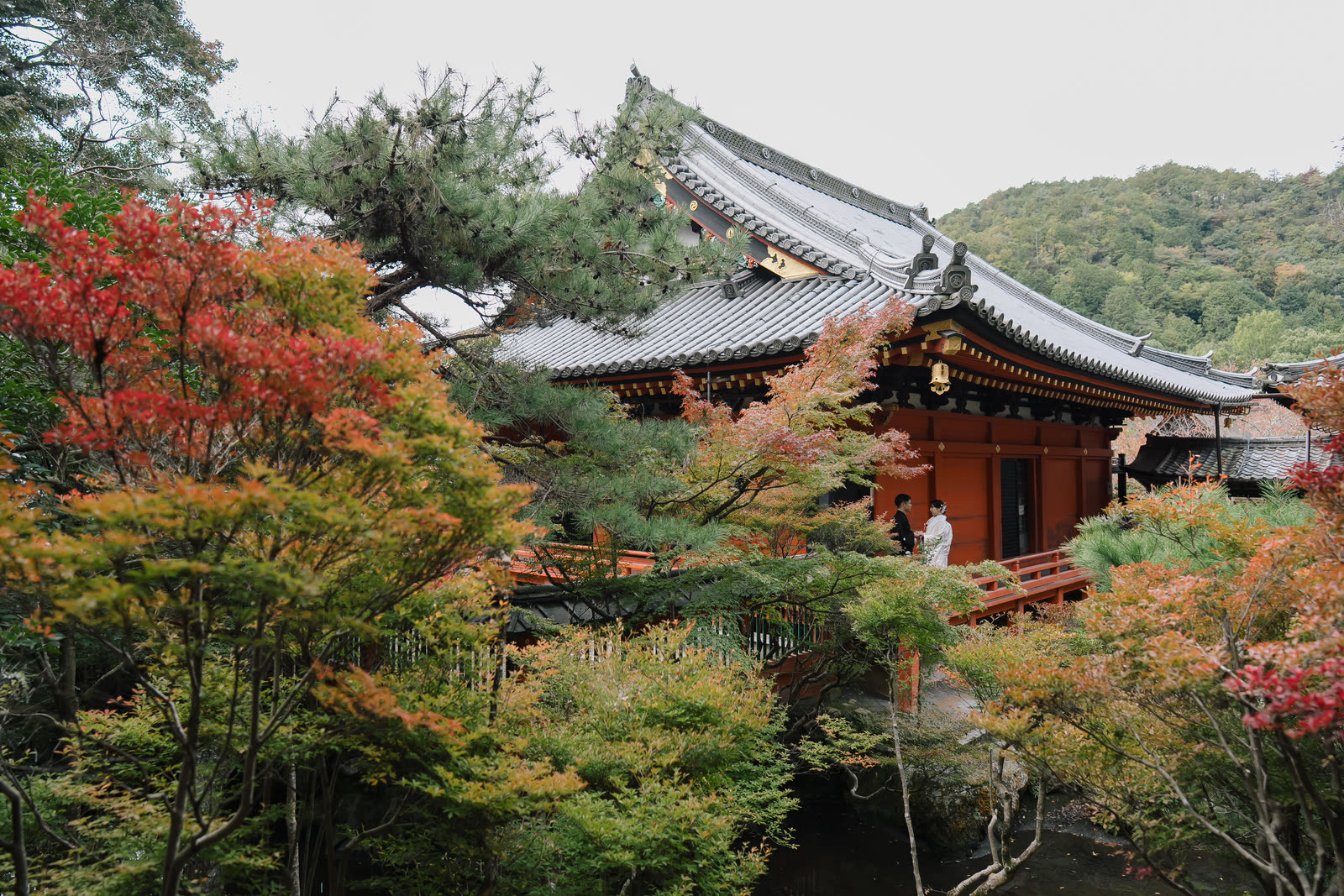
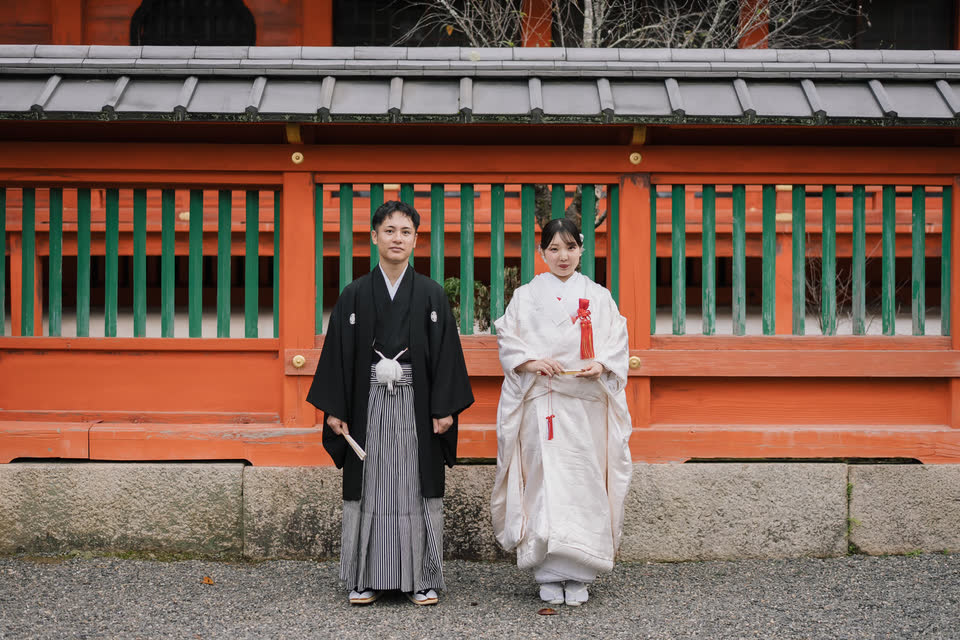
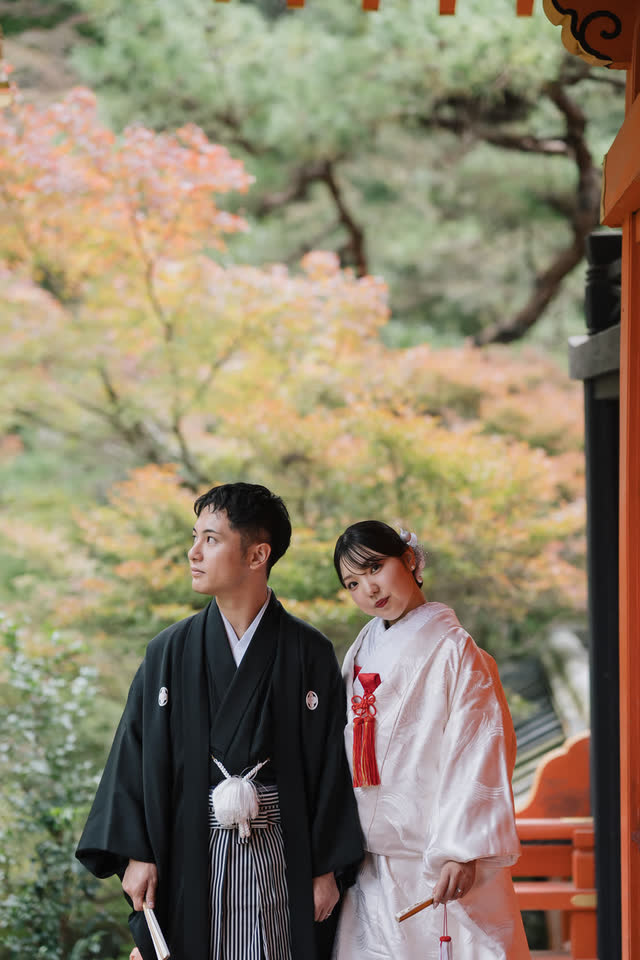
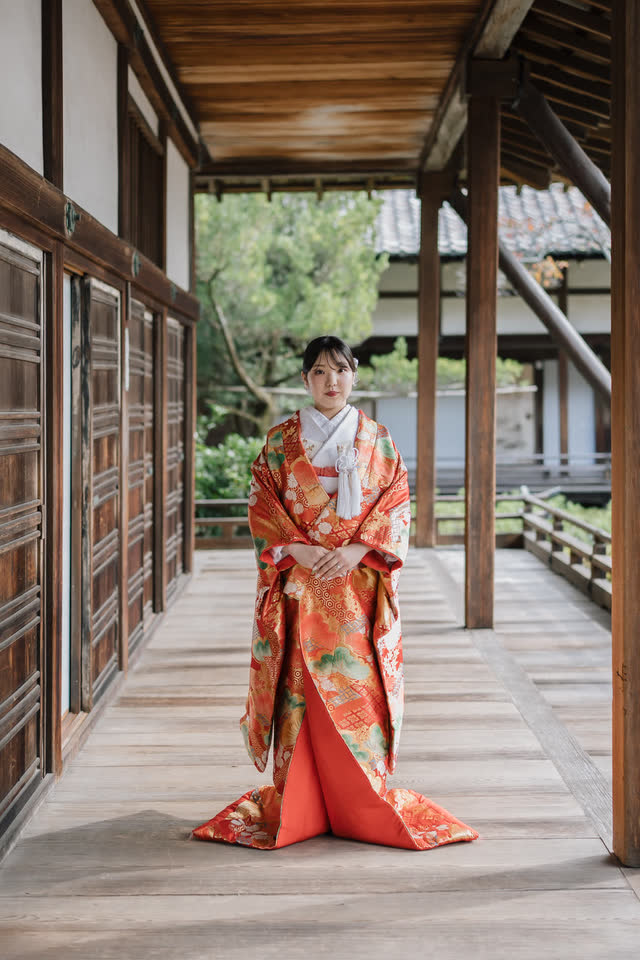
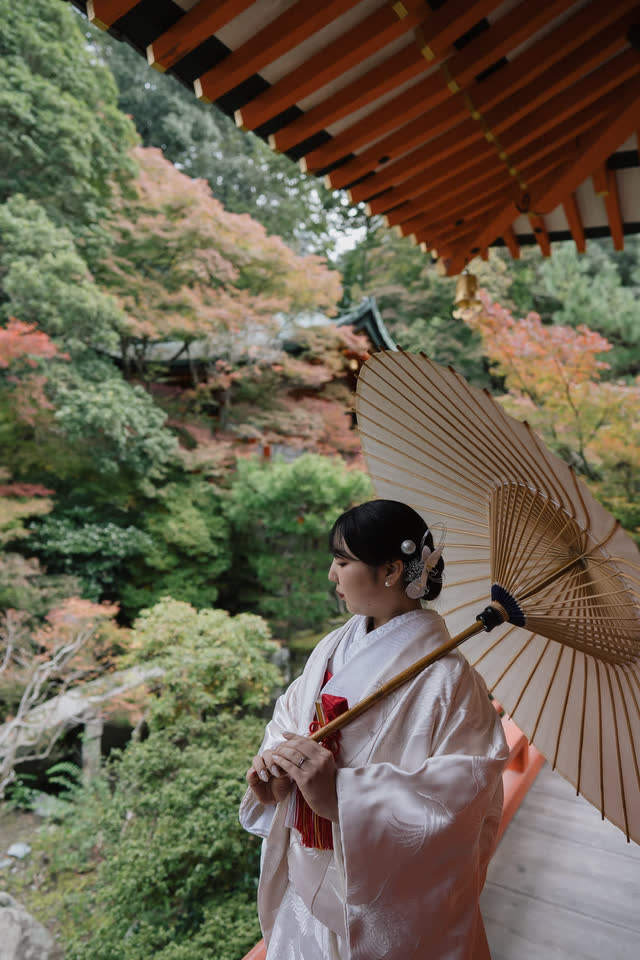
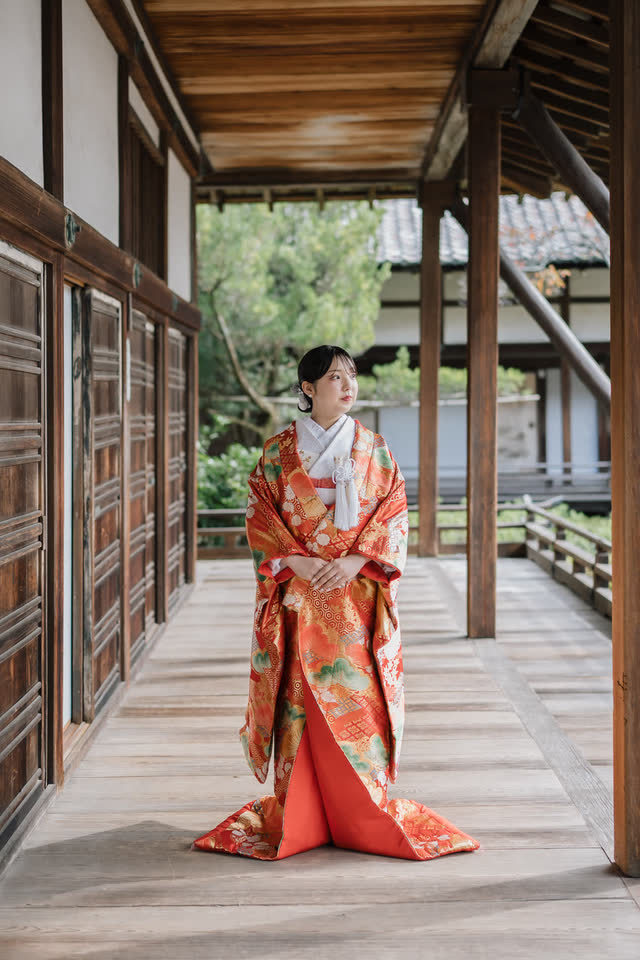
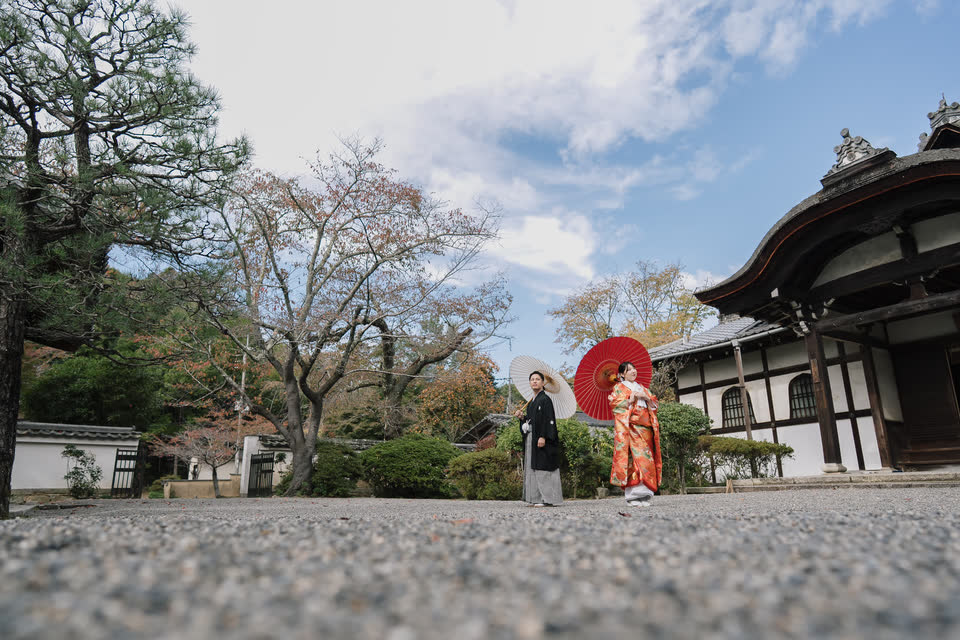
At shrines and temples that accept photography applications. Vermilion halls, temples among the maples and wooden verandas can all be photographed at places like these.
Each temple has its own conditions and dates, and they change. So we check against your date and outfit, and tell you the location before you pay.
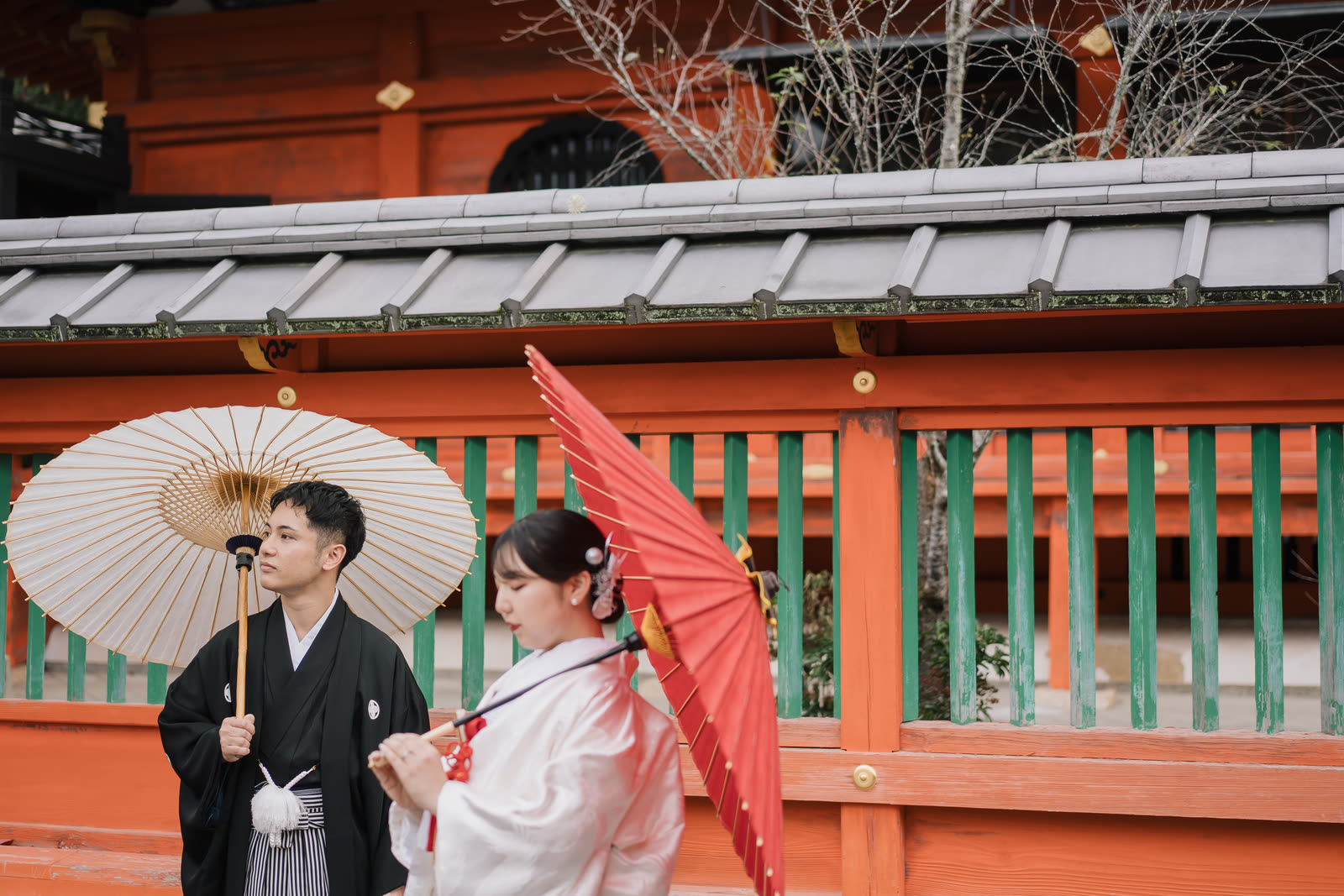
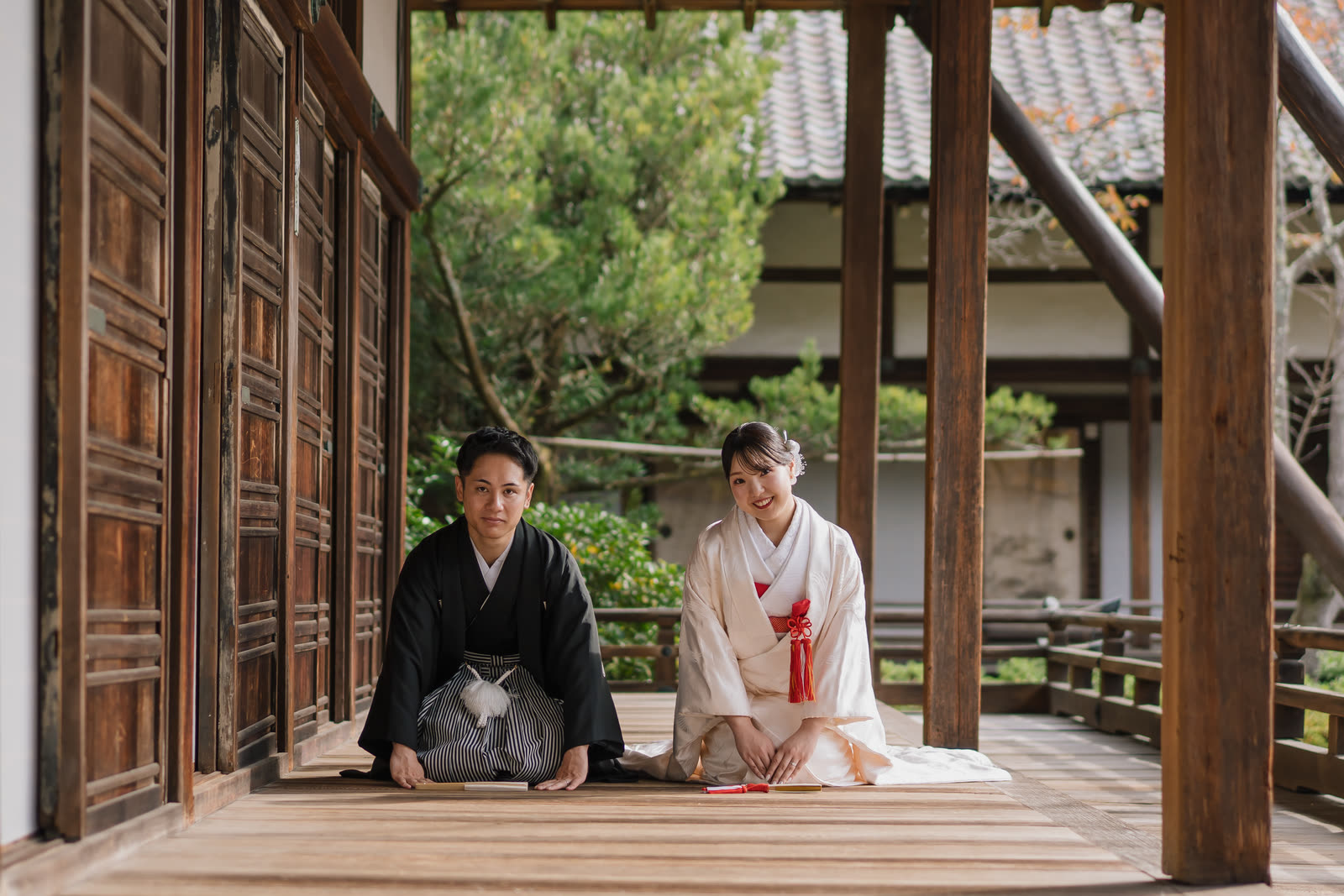
Kyoto Prefecture’s website also introduces an association that offers kimono wedding photography. Its members include the Kyoto Association of Shinto Shrines, the Kyoto Buddhist Association, Kyoto Prefecture, Kyoto City and four wedding companies. Its kimono plan starts at ¥198,000 before tax, with temple and shrine fees extra. The page is undated, so please check its current terms directly.
TAMAKI’s packages cost the same in Kyoto as in Tokyo: Photo Collection is ¥260,000 (before tax). Most location permits and their fees are included in the package. If a location needs a fee you would pay yourselves, we tell you in writing before you book.
Our Kyoto work and what each package includes: Kyoto pre-wedding packages and prices.
Cherry blossom and maple dates in Kyoto
These are the Japan Meteorological Agency’s observations in Kyoto, taken from a single sample tree. Peak times at famous sites do not always match these dates.
| Year | Cherry blossom opens | Full bloom | Maples turn |
|---|---|---|---|
| Average | 26 March | 4 April | 5 December |
| 2023 | 17 March | 24 March | 13 December |
| 2024 | 29 March | 5 April | 20 December |
| 2025 | 27 March | 5 April | 10 December |
| 2026 | 23 March | 30 March | — |
- Cherry blossom: full bloom averages around 4 April. In recent years it has fallen between 24 March and 5 April, almost two weeks apart.
- Maples: the average date is 5 December. In 2024 it came on 20 December, the latest on record.
- Booking: for these two seasons, we suggest booking four to six months ahead.
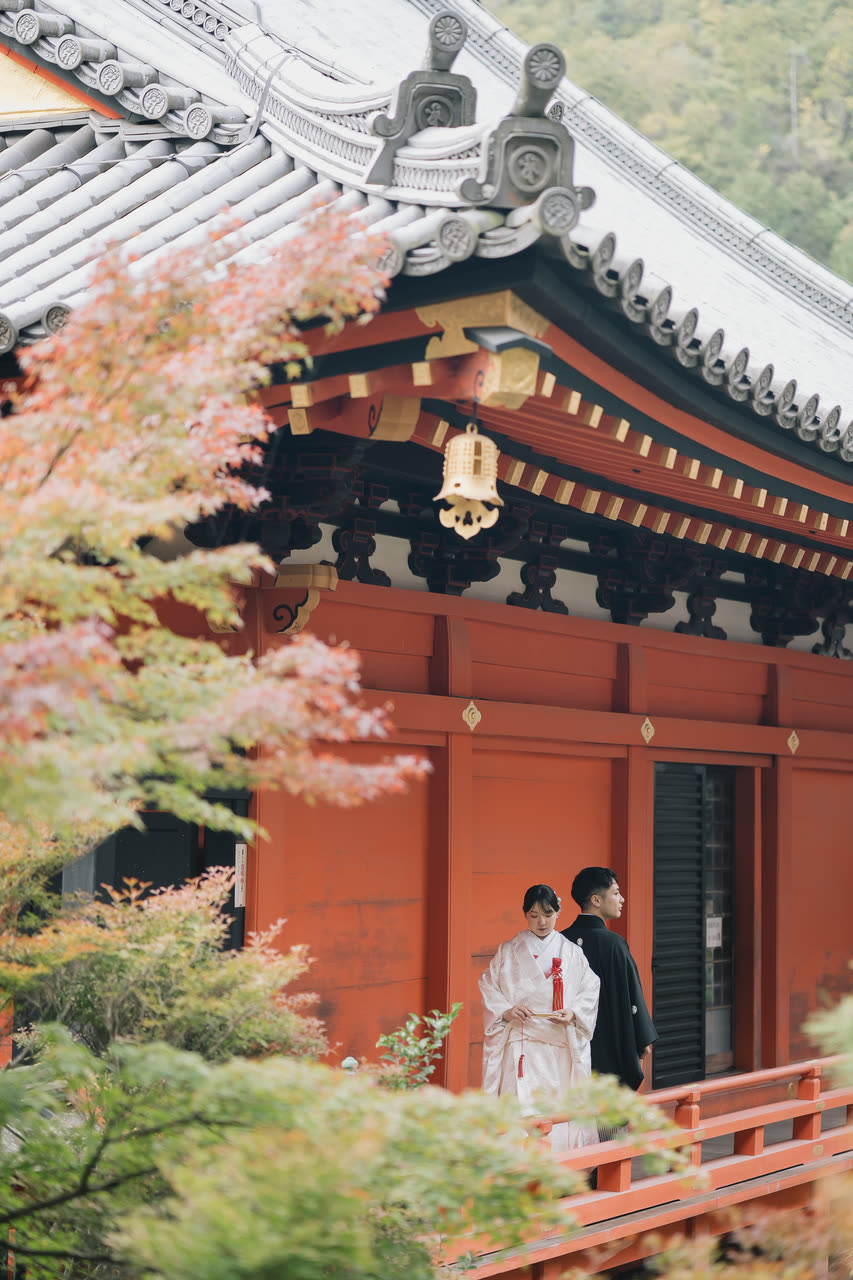
Planning around sakura 2027? See our cherry blossom 2027 guide. For November and December, see autumn leaves pre-wedding in Japan.
Worth knowing before you choose
- Kyoto’s most famous sites do not allow pre-wedding shoots. We cannot arrange photographs on Kiyomizu-dera’s stage or among Fushimi Inari’s thousand torii gates.
- The bamboo path does not accept shoots in the cherry blossom and maple seasons.
- Temples that accept shoots can change their conditions and dates each year, so we name your location only after we have confirmed it.
Questions about Kyoto locations
Can we have a pre-wedding shoot at Kiyomizu-dera?
Can we shoot among the torii gates at Fushimi Inari?
Can we shoot in the Arashiyama bamboo grove?
Will we be fined for taking photos in Gion?
Are Kyoto location fees included in the package?
When is the best time to shoot in Kyoto?
Read next
- Kyoto pre-wedding packages and prices: what is included, our Kyoto work and availability.
- Choosing a wedding kimono: shiromuku, iro-uchikake and montsuki.
- Japan pre-wedding photography permits: what to check before you choose a location.
Beyond the shoot
Planning the rest of your Kyoto trip?
Kyoto shoots start early, so staying near the centre makes the morning easy; we help with the rest of your route. Over chat, we recommend hotels and restaurants by area and by the kind of food you love, and help you plan routes and timing around your shoot. On the day, an interpreter who speaks English, Mandarin or Cantonese can stay by your side, anywhere in Japan.
Thinking of Kyoto?
Tell us your dates and the outfit you picture. We will check which temples accept shoots on those dates, and confirm the location and the written total before any payment.