Pre-Wedding Video in Japan: What Couples Should Know
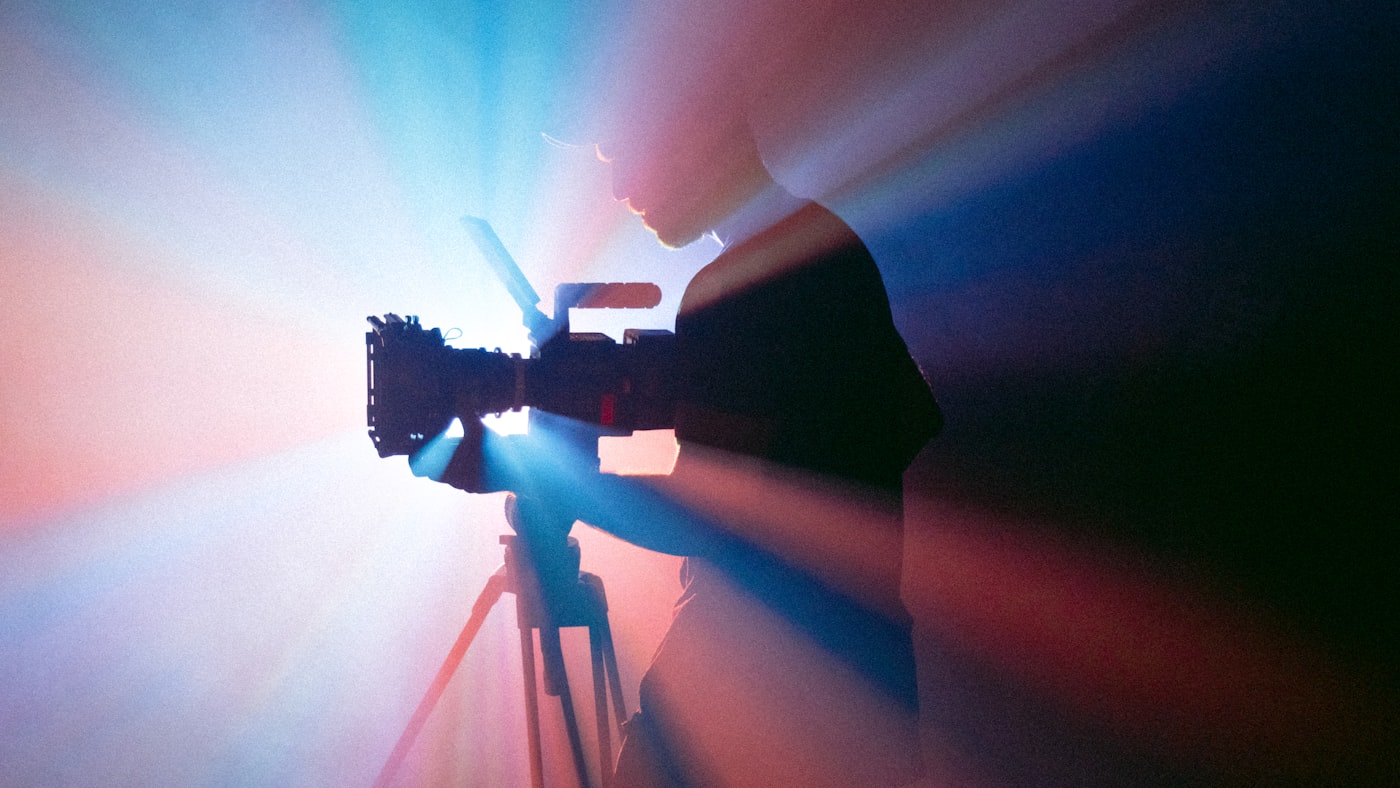
Almost every couple plans photographs. Far fewer plan film, and the usual reason is that in Japan video is sold as an add-on: quoted separately, shot by a second crew who met your photographer an hour earlier, delivered as a folder of clips. This guide sets out what a pre-wedding film actually is when it is planned properly, what you receive, what it changes on the day, and the four questions that separate a good videographer from a disappointing one.
What you actually receive
Every package with film in it delivers two finished pieces, not raw footage: a cinematic film, colour graded and edited to music in 4K, and a separate vertical reel cut from the same footage in the shape Instagram and TikTok expect. The table shows how the published packages differ.
| Package | Photographs | Film | Vertical reel | Price |
|---|---|---|---|---|
| Photo Collection | 50 retouched | — | — | ¥260,000 |
| Signature | 50 retouched | 90 seconds, 4K | 15–30 seconds | ¥380,000 |
| Premium Full Day | 75 retouched | 3 minutes, 4K | 15–30 seconds | ¥500,000 |
| Tokyo Mini | 30 | — | 30 seconds | ¥80,000 |
A longer three-to-five-minute cinematic edit can be added to any package for ¥80,000. Retouched photographs arrive through a private online gallery within 3–4 weeks of the shoot; the film and the reel follow within 4–5 weeks. Full inclusions are on the pricing page.
Why ninety seconds, not fifteen minutes
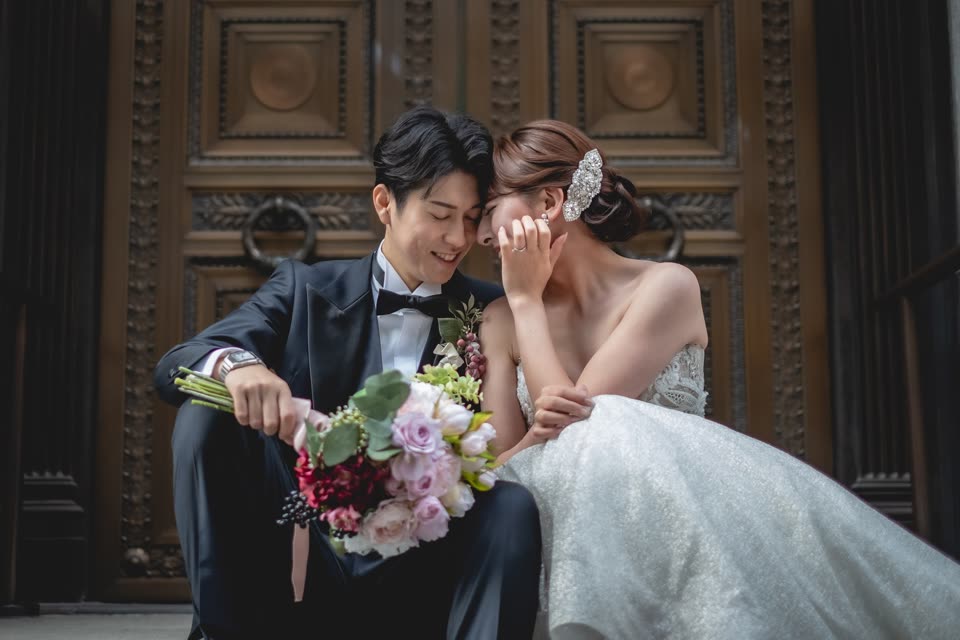
Couples often ask whether ninety seconds is enough. After more than 4,000 wedding films, our answer is that length is not what decides whether a film gets watched again. A fifteen-minute edit is watched in full on the day it arrives, then rarely: it is too long to open on a phone, too long to show a friend across a dinner table. Ninety seconds fits the moments people actually reach for it — a phone passed around a family table, a laptop opened with a parent who could not travel, a screen at the reception. Every frame has to earn its place, and that is what makes it last. If you want the long version too, it exists as the add-on above; we simply do not make it the default.
What changes on the day when a camera is rolling
Less than you might expect, provided photography and film are planned as one production.
- You do not receive fewer photographs. Signature includes the same 50 retouched images as the Photo Collection. The photographer and the filmmaker shoot at the same time rather than taking turns.
- The day is not slower. The route, the light and the order of your looks are planned once, for both cameras. There is no second crew waiting for its turn and no separate set of instructions to follow.
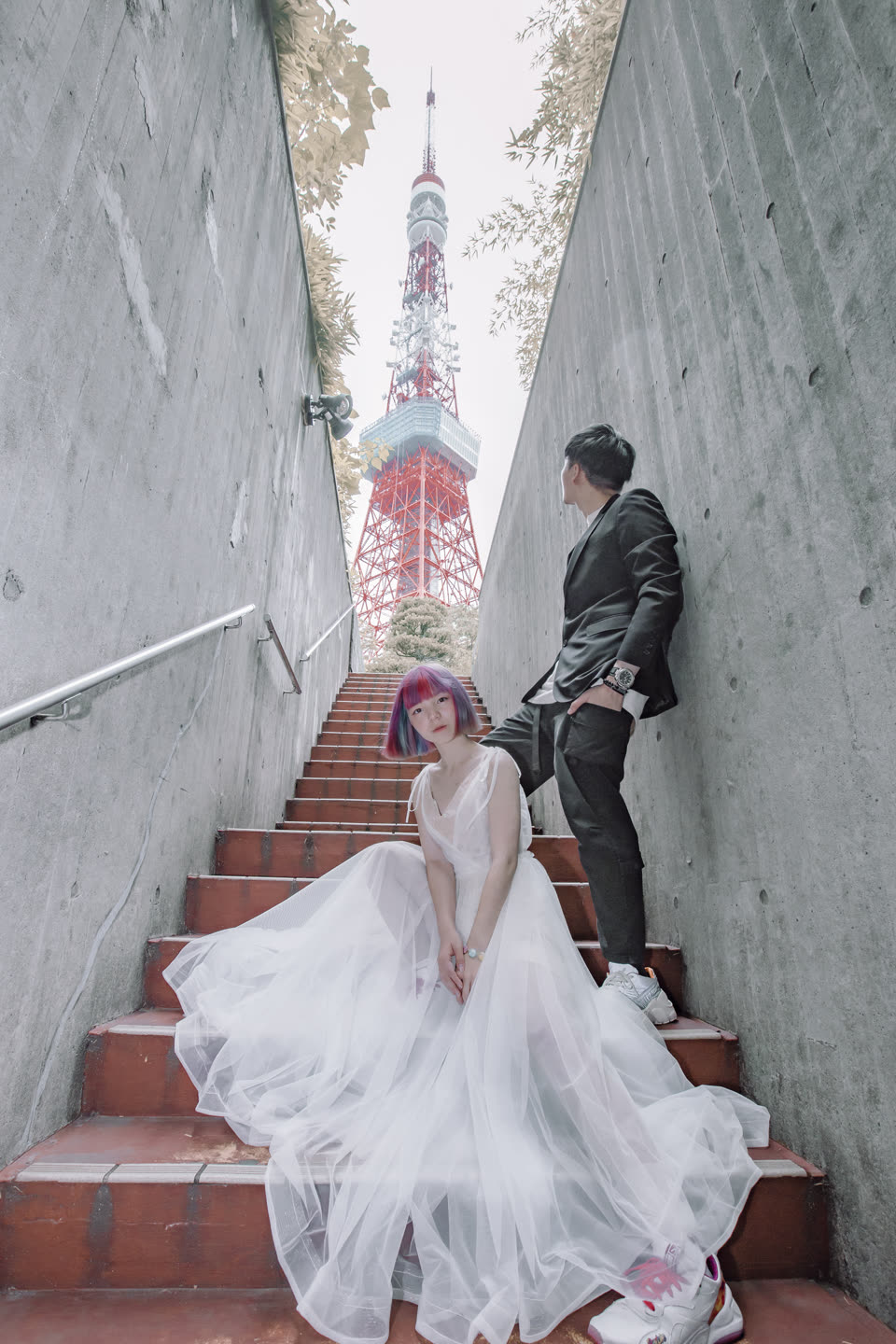
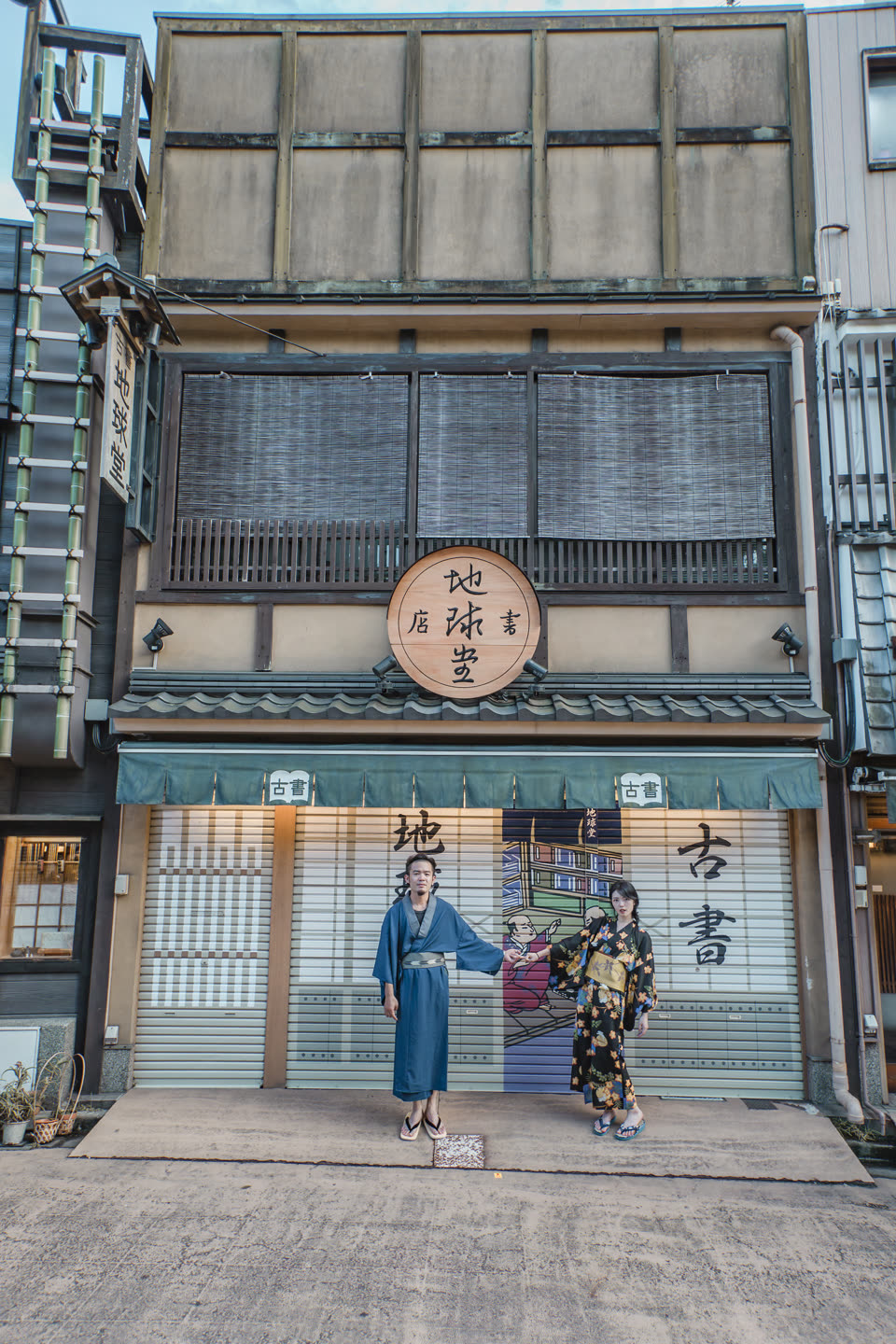
- You are asked to move, not to hold. Film is made of movement: walking a lane in Asakusa, fixing each other’s collar, laughing at something the photographer did not plan. The stills come from the same minutes. The best thing you can do is keep talking to each other and let the team follow.
- The permit covers filming. Some venues in Japan treat still photography and filming as separate permissions, and price them separately. For your confirmed listed location we confirm before booking that the approved plan covers both, so nothing is negotiated at the gate.
Who films, and who edits
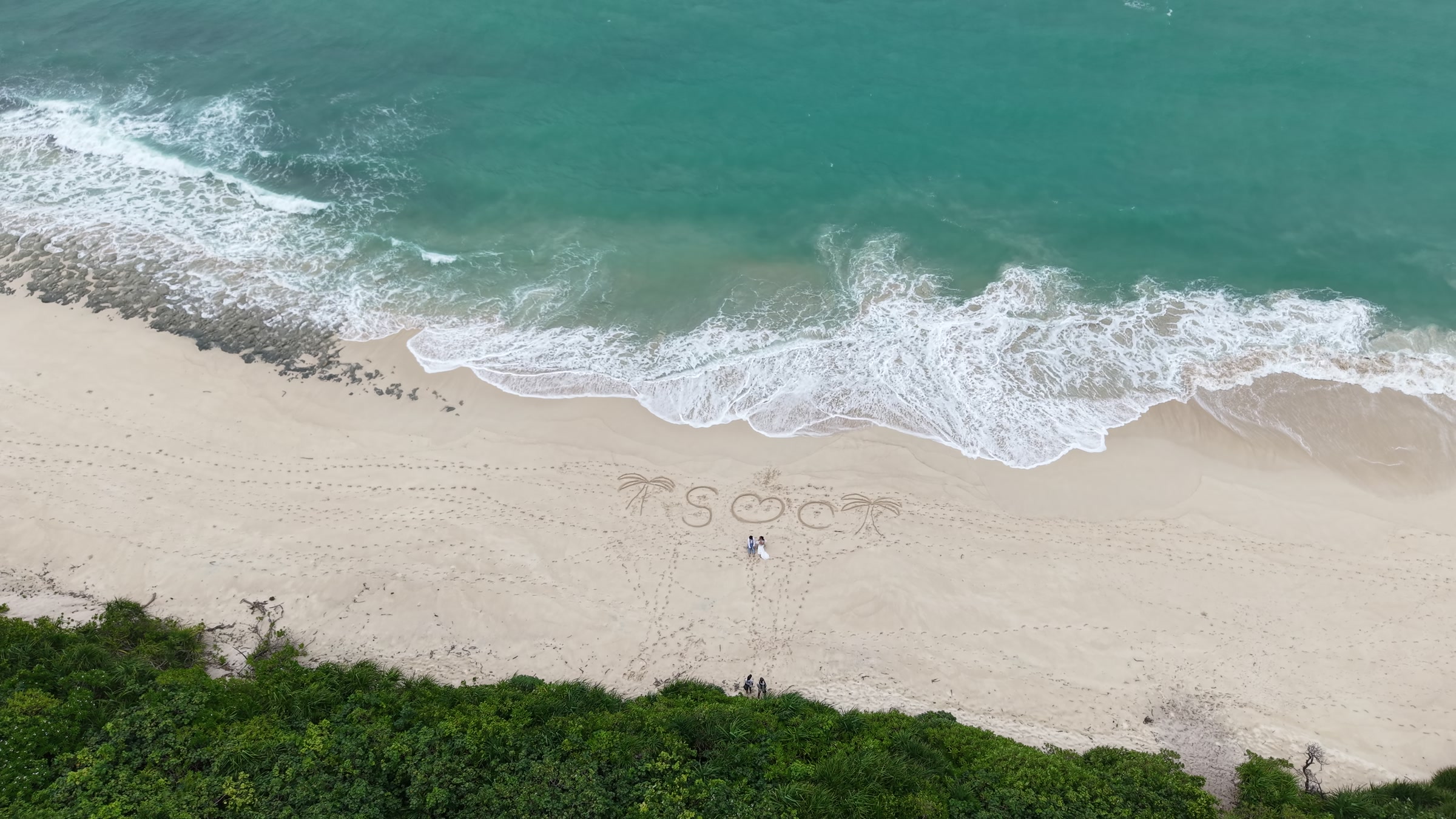
TAMAKI is operated by CJC Inc., a Tokyo wedding-film production company. Filming is carried out by the same production team as your photography, and the selection, editing, colour grading and music are handled by CJC’s own post-production team in Tokyo. Hours of footage are reduced to the sequences that carry the day: how you moved, how you looked at each other, the weather that happened to be there. Nothing is passed to an unfamiliar editor. The Film page shows a sample of the craft.
Where the film actually goes
It helps to know this before you decide, because it settles the length question for most couples.
- At the wedding itself. Many couples play the film at their reception, months after the shoot. A ninety-second cut sits comfortably inside a programme; a long edit rarely does.
- With family who could not travel. Parents and grandparents who could not come to Japan see the day the way it felt, rather than scrolling a folder of files.
- On your socials, without re-cutting. The vertical reel is delivered in the right shape, so nothing has to be cropped or re-edited afterwards.
Four questions to ask any videographer in Japan
Whoever you choose — us or anyone else — these four questions will save you the common disappointments.
- Will the same team shoot photo and video, or two separate vendors? Two crews compete for the same angle, the same light and the same five minutes of golden hour.
- When is delivery, and is a social-media cut included? Ask for both dates in writing, and ask whether the vertical version is cut from the same footage or charged separately.
- Are location permits arranged for video as well as photo? If the answer is vague, the answer is no.
- Can you see full-length sample films, not just highlight trailers? A trailer hides pacing. A finished film shows it.
If you are still deciding between one focused setting and two contrasting looks, the preparation guide walks through what to settle before the day, and we will recommend the smaller plan when it is enough.
Common questions
Do we receive fewer photographs if we add film?
No. Signature includes the same 50 retouched photographs as the Photo Collection, and Premium Full Day includes 75. The photographer and the filmmaker work at the same time rather than taking turns.
Is the video an unedited collection of clips?
No. Signature delivers a finished 90-second cinematic film in 4K, colour graded and edited to music, plus a separate vertical reel. Premium delivers a three-minute finished film and a reel.
Are permits for filming included?
The required permit for your confirmed listed location is included. Because some venues distinguish between still photography and filming, we confirm that the approved plan covers both before booking.
When do we receive the film?
Retouched photographs arrive within 3–4 weeks through a private online gallery. The cinematic film and the vertical reel follow within 4–5 weeks.
Beyond the shoot
Planning the rest of your trip?
Your film keeps how the day felt; we also help with the days around it. Over chat, we recommend hotels and restaurants by area and by the kind of food you love, and help you plan routes and timing around your shoot. On the day, an interpreter who speaks English, Mandarin or Cantonese can stay by your side, included in the price.