Shiromuku, Iro-uchikake or Montsuki: Choosing What to Wear
The short answer
The question is not which is more beautiful. It is which one the place can carry.
Couples usually arrive having seen both and liking both. What settles it is the setting: white reads as light against dark wood and deep green, and red reads as a single point of colour against grey stone and vermilion. Choose the location first, and the kimono almost chooses itself. This page is what each one actually is, and where we would put it.
Shiromuku — white, and the oldest of the three
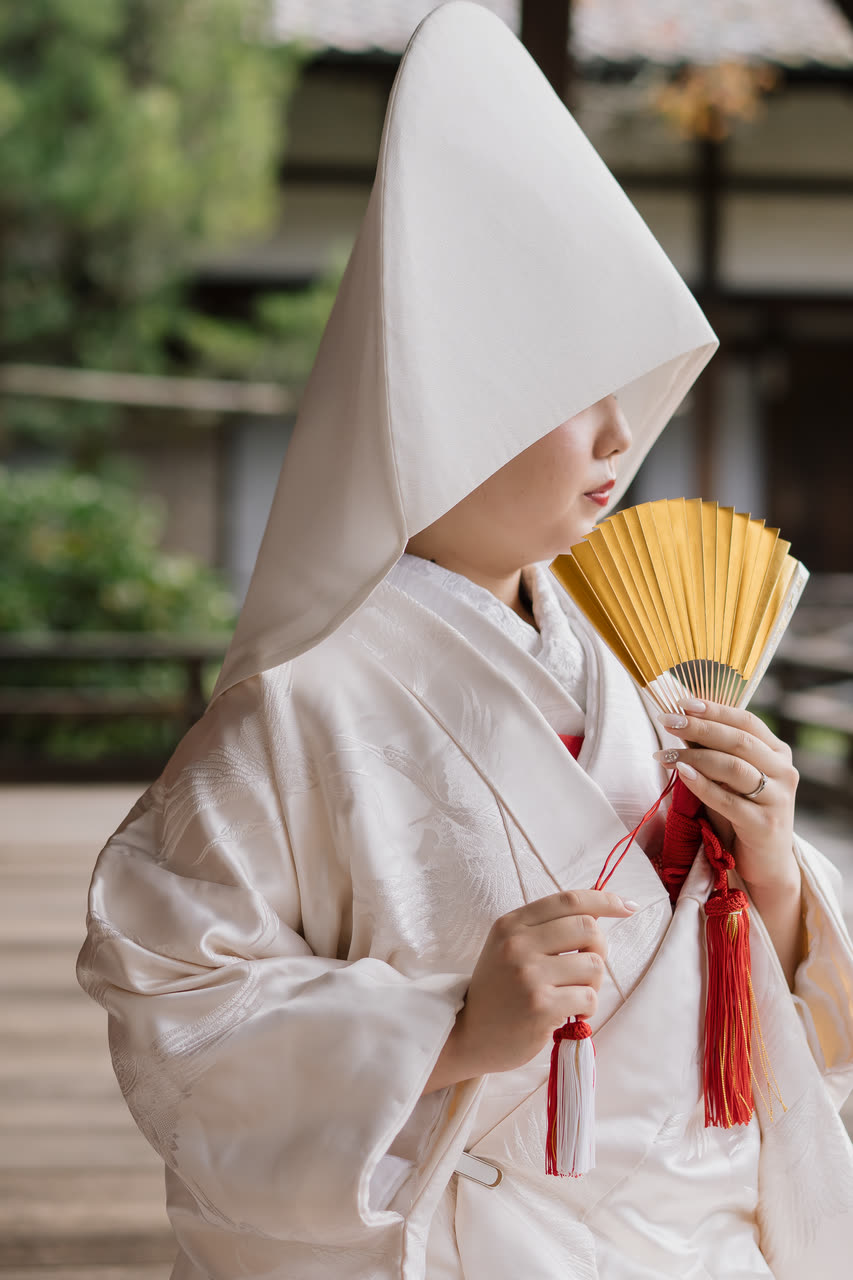
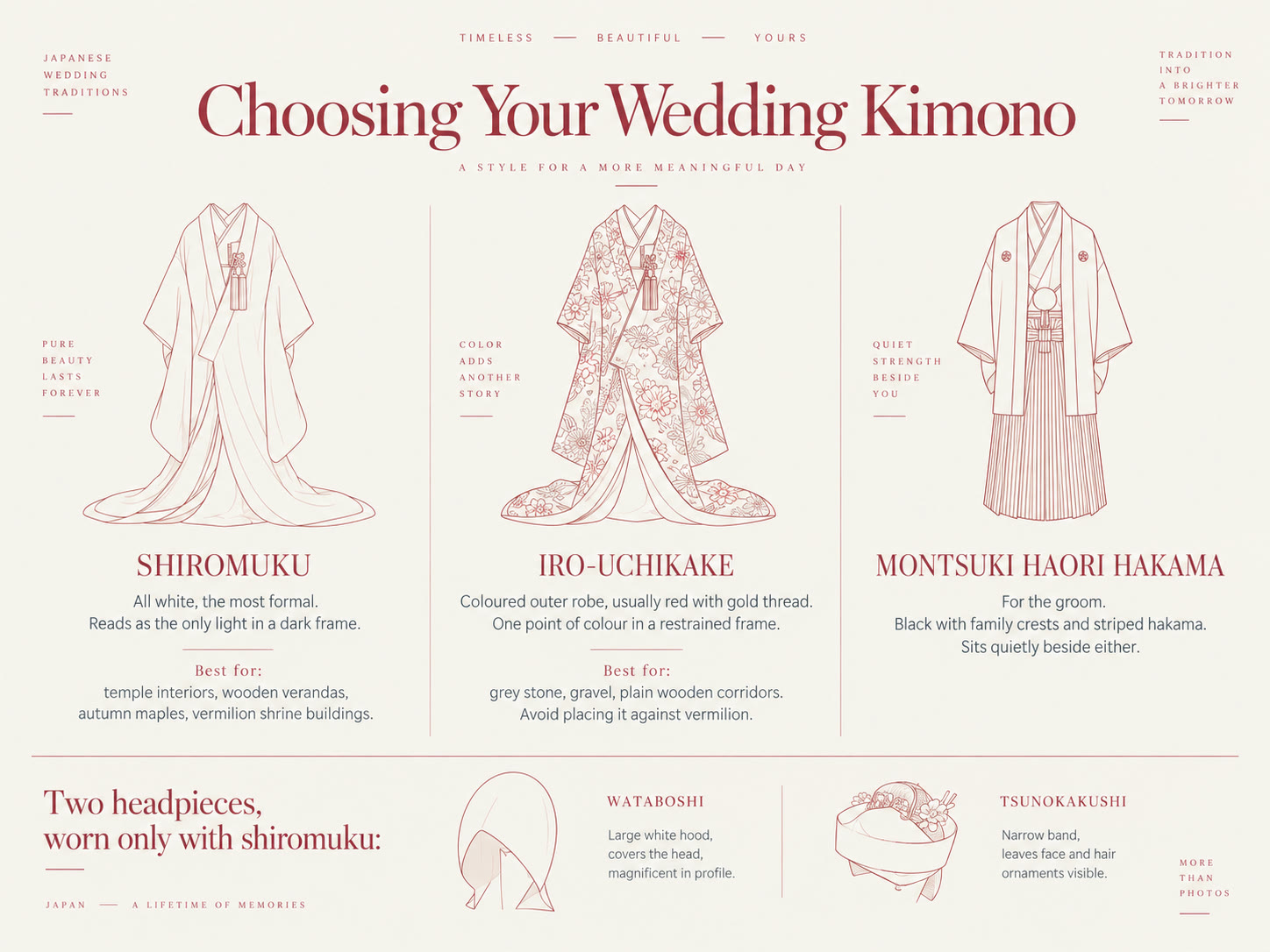
The shiromuku is white from the outer robe to the collar to the small accessories, and it is the most formal thing a bride can wear in Japan. Photographically it behaves like a light source: in a dark temple corridor or against November maples, it holds the eye without any help. It is also the most forgiving in bright conditions, which matters for the morning starts we recommend.
The shiromuku is worn with one of two headpieces, and they are not interchangeable.
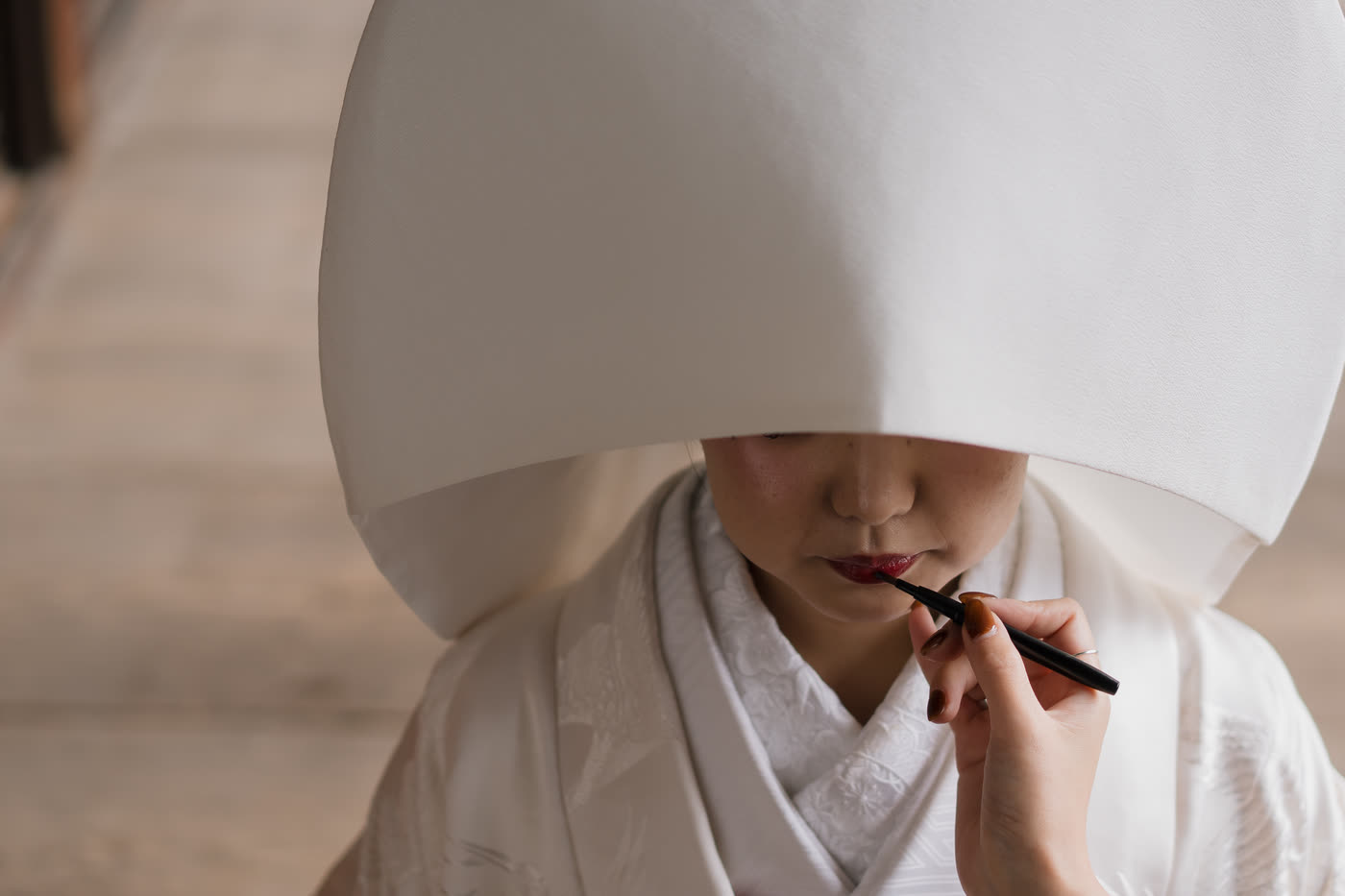
- Wataboshi — the large white hood that covers the whole head and frames the face from the side. It is worn only with shiromuku. It makes profile and three-quarter frames extraordinary, and it limits what a photographer can do from directly in front.
- Tsunokakushi — a narrower band over the hairstyle, leaving the face and the hair ornaments visible. More open, and it can also be worn with coloured kimono.
If you want both, you can: the wataboshi comes off in a moment, and we normally shoot part of the morning each way. It costs nothing but a few minutes.
Iro-uchikake — colour, usually red
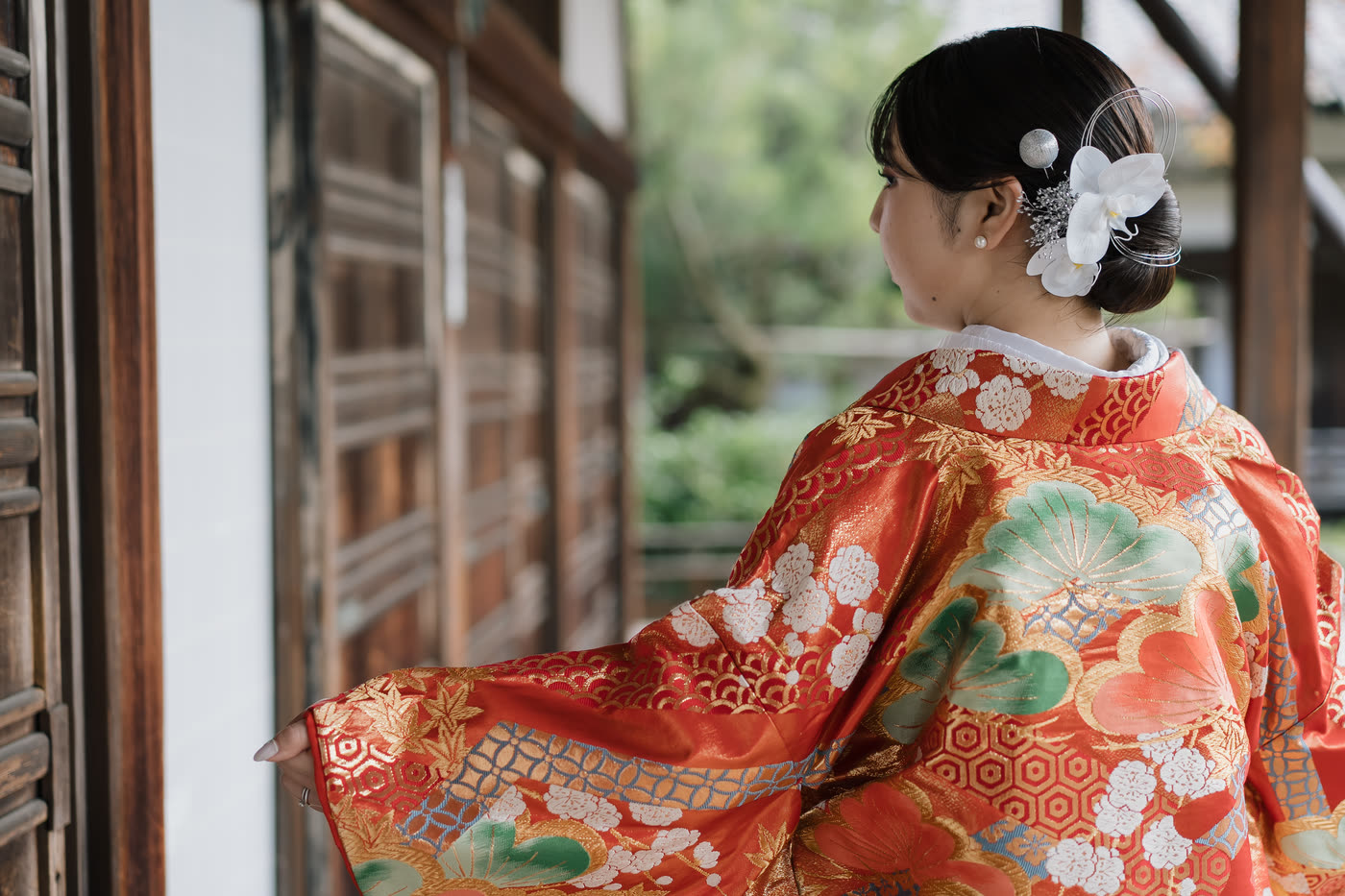
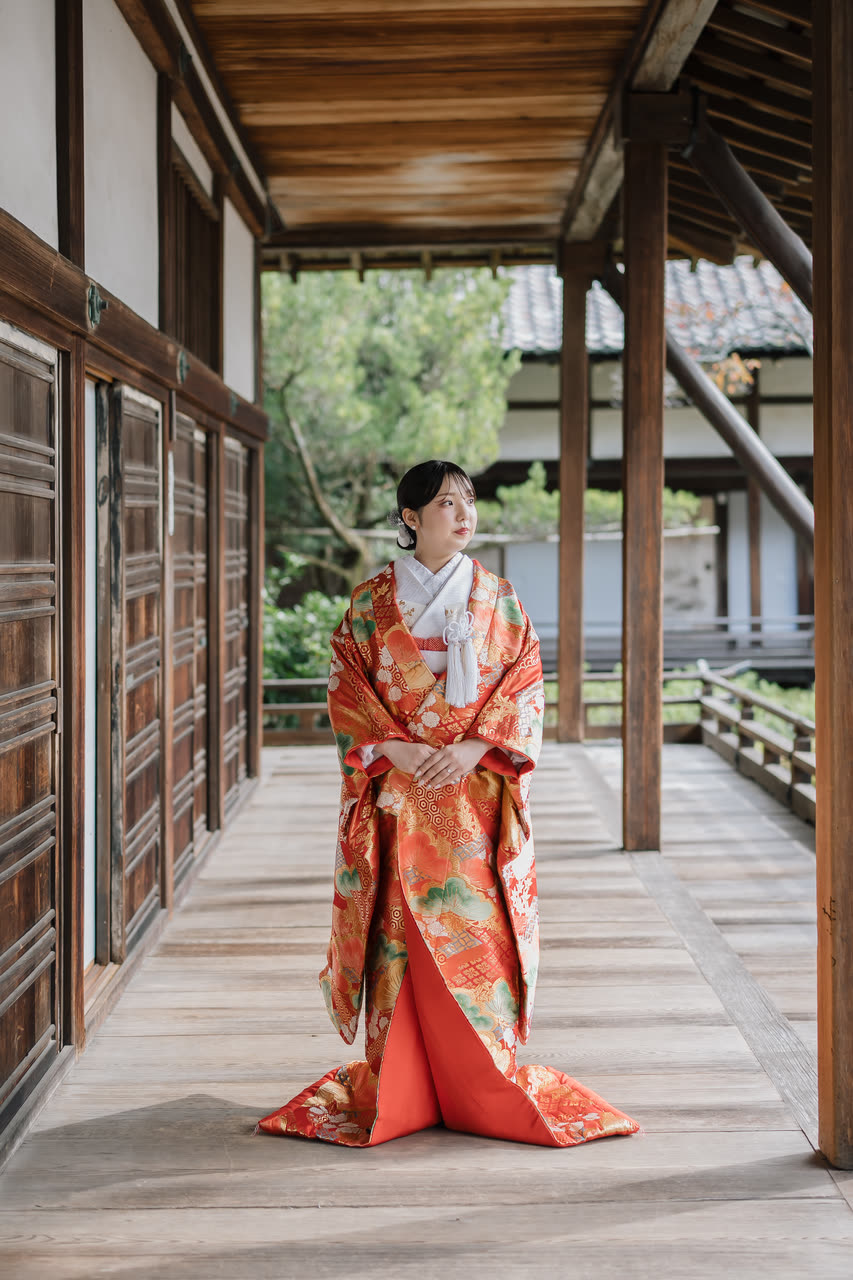
The iro-uchikake is the coloured outer robe, most often red, and often carrying cranes, pines or flowers in gold thread. Where the shiromuku is quiet, this is emphatic. In a wooden corridor or on grey gravel it is the only colour in the frame, and photographs of it tend to be the ones couples enlarge.
Two practical notes. It photographs best where the background is restrained — put a red uchikake in front of a vermilion shrine gate and the two reds fight. And it is heavier than it looks, so we plan the walking around it rather than the other way round.
Hikifurisode — the third option, less often asked for
A long-sleeved kimono worn without the heavy outer robe, with the hem trailing. It is lighter to move in and reads as less formal, and it suits couples who want the look without the weight. We can arrange it; it is simply requested less often than the two above, so we mention it rather than lead with it.
For the groom — montsuki haori hakama
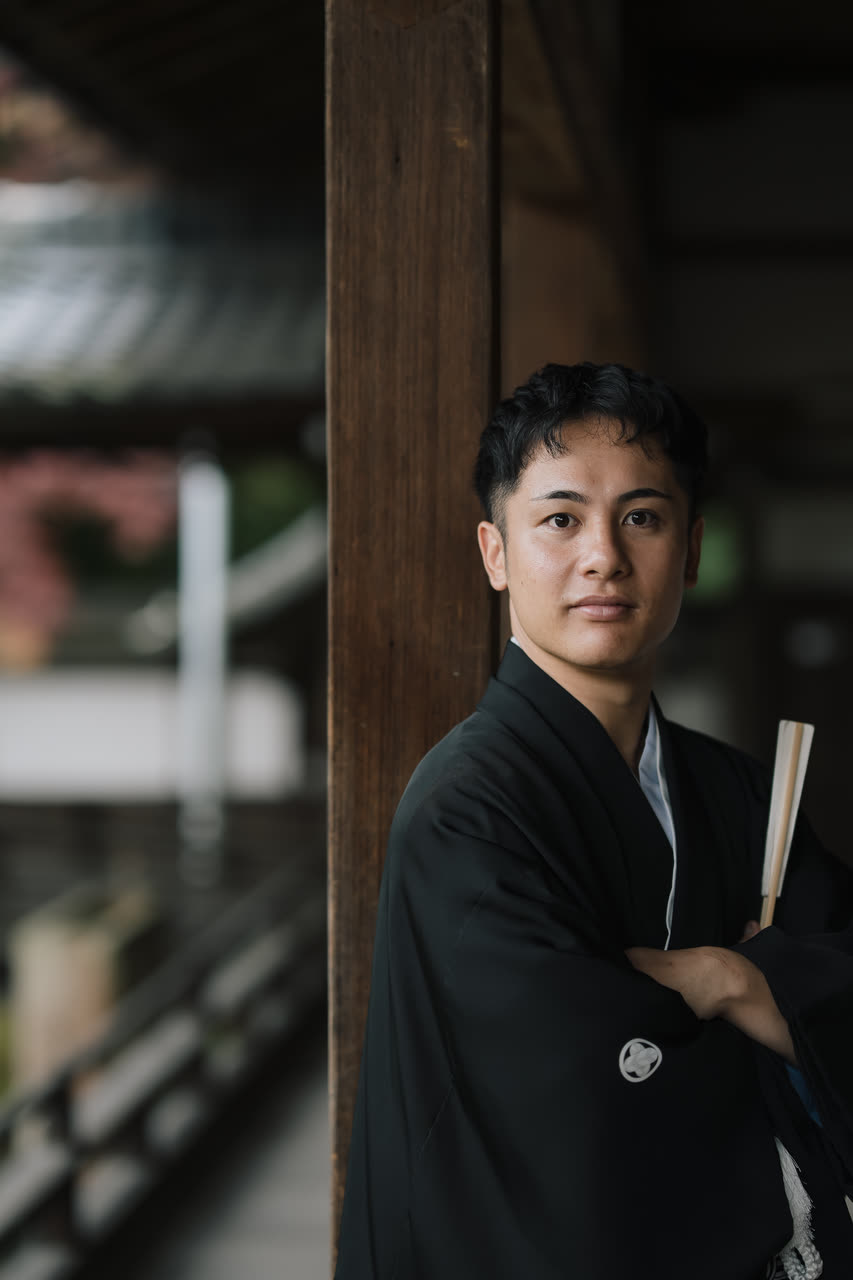
Black montsuki with family crests, a haori jacket and striped hakama. There is effectively one formal answer for men, which removes a decision, and it works beside either bride's outfit. Grooms are often surprised by how much they are photographed — the crest, the hakama pleats, the hands. It is worth standing up straight.
Which one for which place
| Setting | What we would suggest | Why |
|---|---|---|
| Dark wood, engawa veranda, temple interior | Shiromuku | White is the only light in the frame |
| Autumn maples | Shiromuku | Red belongs to the trees; a red robe competes with them |
| Grey stone, gravel, plain corridor | Iro-uchikake | One point of colour in a restrained frame |
| Vermilion shrine buildings | Shiromuku | Two strong reds in one frame rarely works |
| Cherry blossom | Either, honestly | Pink sits happily beside both — choose on feeling |
Can we wear both?
Yes, and it is the most common question we are asked. Each package includes one outfit, so two looks means two shoots — usually on two mornings in two different places. That is not us being difficult about it: a change of kimono is a full re-dress and a change of hair, and doing it inside one half-day would cost you most of the good light. Two mornings also gives you two completely different sets of photographs rather than one location twice.
If your heart is set on one kimono and one gown, that works the same way, and it is what most couples travelling from overseas choose.
Questions about the kimono itself
Is the kimono included, or do we rent it separately?
Can we choose the exact kimono?
Is a wataboshi or a tsunokakushi better for photographs?
Can a man wear colour instead of black?
Is kimono difficult to move in?
Where can we see more of these?
Not sure which suits you?
Tell us where you are thinking of shooting and roughly when. We will say which we would put you in and why — and we will tell you honestly if the other one is the better answer.