Okinawa Pre-Wedding Locations: Permits, Crowds and Travel Time
The short answer
Choose the plan, not just the beach.
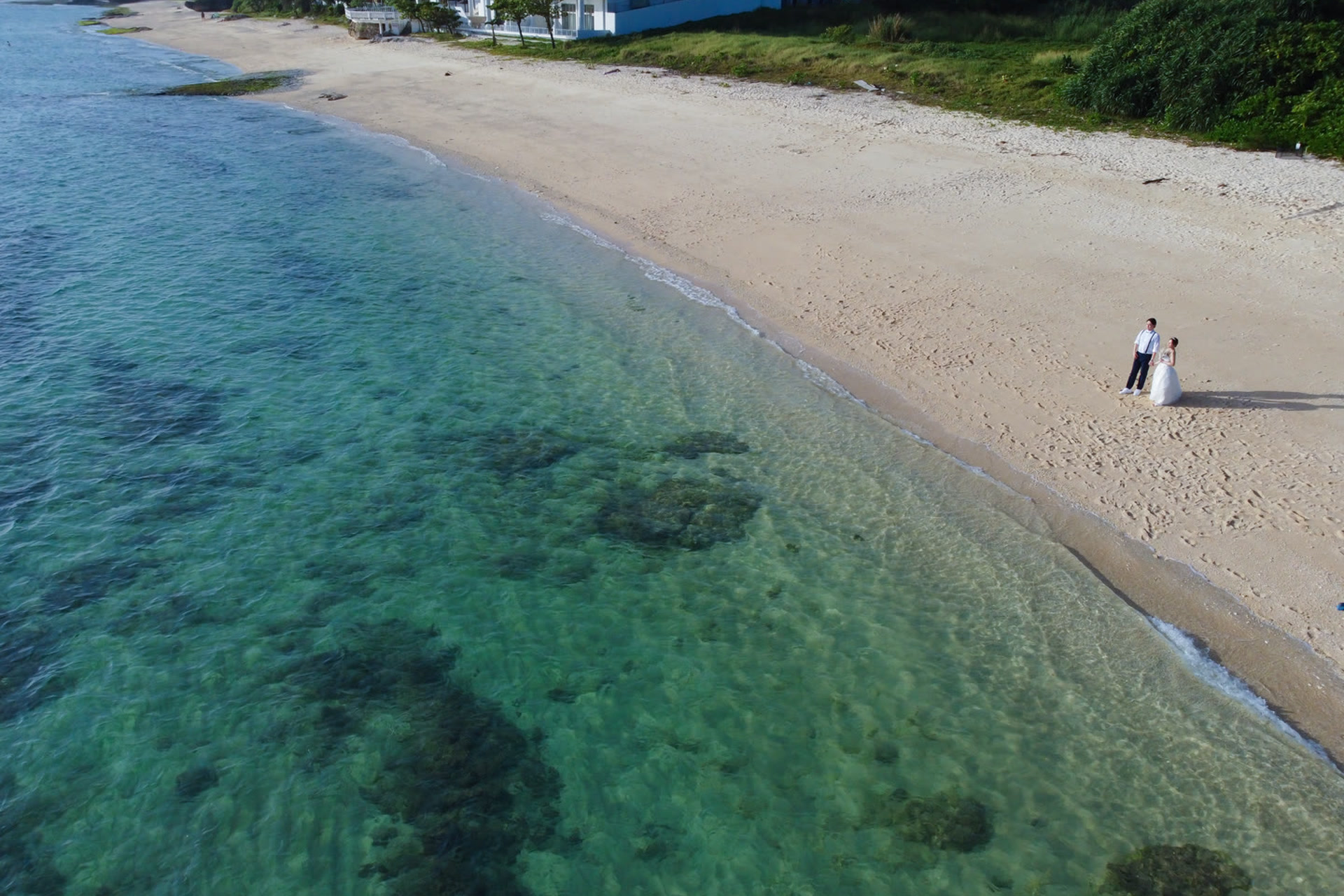
An Okinawa pre-wedding location has to work at a particular hour, with the tide and weather you are likely to meet, within a realistic driving schedule and under the rules set by its manager. A beach can look effortless in one photograph and still require an application, advance documents, parking arrangements and a second location in case conditions change. The best choice is the one that gives you a strong photograph and a day that can actually run.
Why a list of beautiful beaches is not enough
Location galleries are useful for deciding what you like: turquoise water, pale sand, dark rocks, open horizon or greenery. They are less useful for answering the questions that shape the shoot. Is commercial photography allowed? Who manages the space? How far ahead must the application be filed? Where can the vehicle stop? What does the beach look like at the scheduled tide? What happens if wind or rain makes the first choice unsuitable?
Those questions matter especially in Okinawa because a beach is often a working public space rather than a private set. Other visitors remain free to use it. A permit allows an approved activity under stated conditions; it does not close the beach, reserve an empty background or guarantee permission for every request.
Araha Beach: accessible, public and permission-led
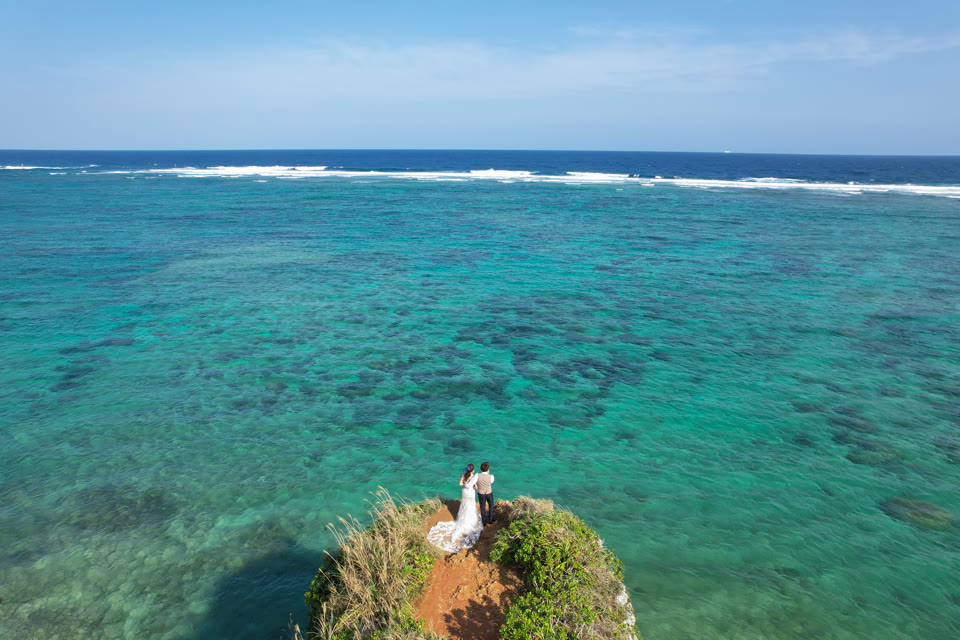
Araha Beach in Chatan is a useful example of why planning starts with the manager rather than with the camera. The official Chatan Town guidance says that commercial photography and filming require permission, that applications are handled by the designated park manager, and that permission is not guaranteed.
The Okinawa Film Office location page describes Araha as a place used by runners, families and visitors. For commercial filming, it directs applicants to consult by telephone first and submit a proposal and application in advance, generally at least two weeks before the shoot.
That tells you more than a photograph can. Araha may suit a plan that values straightforward access and a broad seaside setting, but it should be treated as a shared public place. Framing, start time and patience are part of the plan. Listing the beach on a mood board is not the same as having approval to photograph there.
Onna Village: the application is part of the schedule
Onna Village shows a more formal version of the same principle. The Onna Village Tourism Association application page and its coastal shooting guidelines require operator registration and permission for covered commercial shoots in coastal areas. Applications are generally due at least one week ahead; shorter-notice applications carry an additional charge.
The published procedure also includes collecting and returning an armband and parking pass, and displaying the permit in the vehicle. This is easy to miss when comparing photographs online. The practical cost of a location is not only an application fee. It is also the lead time, administration, collection and return, parking and the hours available after all of that has been fitted into the day.
These are examples of current systems, not a promise that TAMAKI can use every part of Araha Beach or the Onna coast on every date. The manager makes the decision, and rules can vary by the exact area and activity.
Araha Beach
Consult, then apply
- Commercial permit
- Consult first
- Generally two weeks
- Public shared space
Onna Village
Register, then prepare
- Operator registration
- Generally one week
- Collect and return armband + parking pass
- Permit displayed in vehicle

What crowds change in the photographs
There is no reliable crowd number that applies to every day. Weekends, holidays, weather and the hour can transform the same stretch of coast. Instead of promising an empty beach, a workable plan reduces the effect of other people.
- Start time: earlier hours can offer softer light and more room, subject to access and permit conditions.
- Direction: a clean background may be a change of camera angle rather than a different beach.
- Shot order: wide frames can be made when the background clears; close portraits can continue while it does not.
- Expectations: approval to shoot is different from exclusive use of a public place.
Travel time is creative time
Okinawa looks compact on a map, but a second beach can consume a meaningful part of a half-day once loading, traffic, parking and walking are included. Two locations are valuable when they add a real contrast. They are poor value when most of the best light is spent inside a vehicle.
We therefore compare a second location with what the same time could produce at the first: a change of outfit, a different stretch of coast, a shaded portrait set or the move from bright daylight towards sunset. The itinerary should be built from usable shooting minutes, not from the number of pins saved to a map.
One location
More room to work through light, angles and pace.
Two locations
More variety, with more transitions, parking and walking.
Light, tide and wind can change the same beach
Coastal photographs depend on conditions that a location name does not capture. A higher tide can reduce the sand available for walking. A lower tide may reveal rocks or reef. Midday sun can make water appear bright and blue while creating harder light on faces; later light is softer but gives the schedule less room to recover from delays. Wind affects hair, fabric, audio and whether a long veil is practical.
None of these makes one hour universally best. The right choice depends on whether the priority is water colour, gentle portraits, sunset, film, a particular outfit or a relaxed pace. Tide and forecast information should be checked close enough to the date to be useful, while the permission process must begin early enough to meet the manager’s deadline.
Tide
Changes how much sand, rock or reef is visible.
Light
Changes water colour, portraits and room for delay.
Wind
Changes hair, fabric, audio and veil choices.
A backup should be agreed before the weather turns
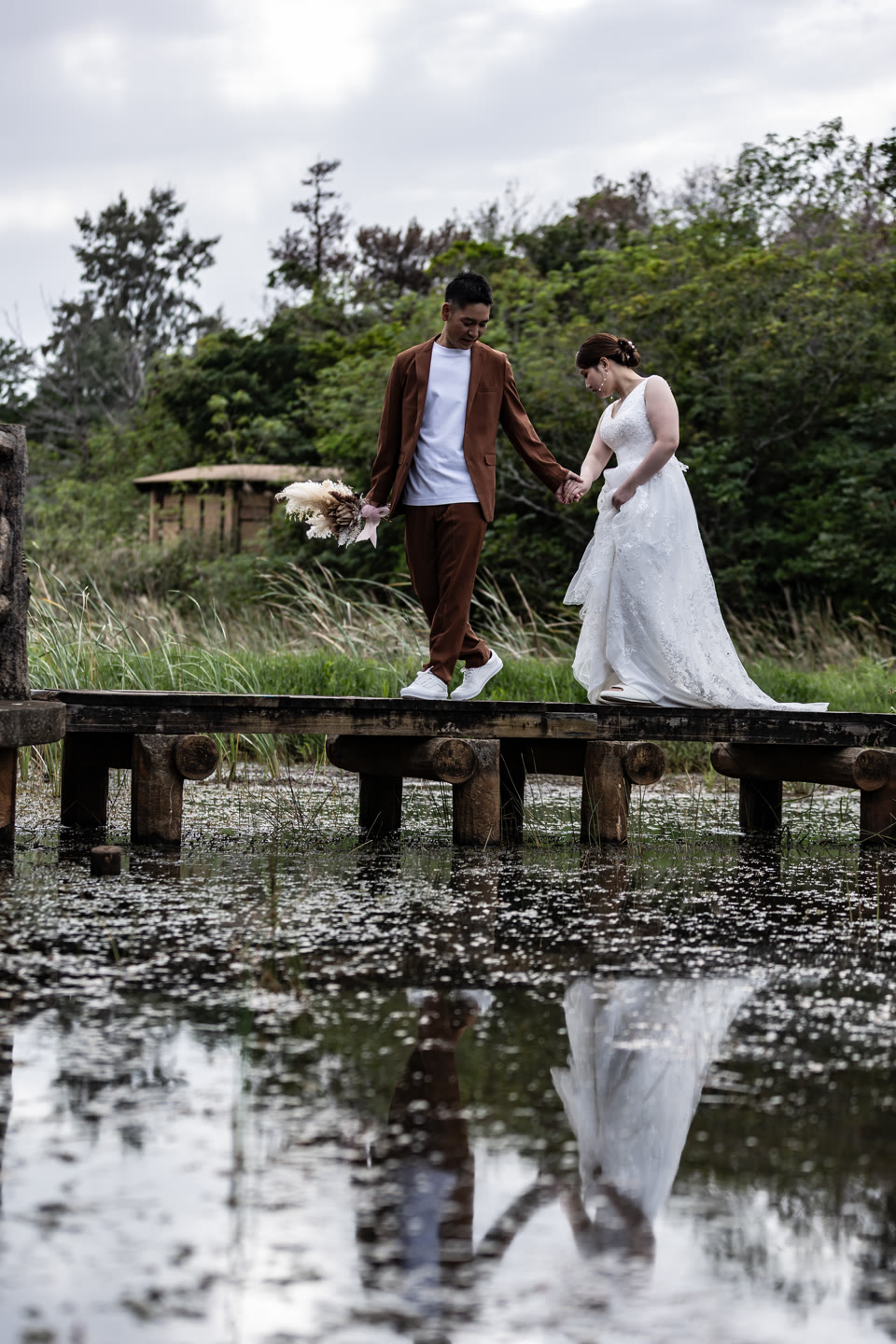
A useful backup is specific. It might be a sheltered nearby setting, a different section of coast, a revised start time or a shot plan that relies less on an open horizon. It should also be legal and logistically possible; an unpermitted beach saved on a phone is not a backup.
Before payment, the written plan should identify the intended area, the rules that apply, the assumptions behind timing and what happens if permission or conditions make it unsuitable. That prevents the backup from becoming a rushed decision on the morning.
How TAMAKI confirms an Okinawa location
- 1Visual priority
- 2Manager & rules
- 3Permit window
- 4Light, tide & access
- 5Backup
- 6Written confirmation
For a location agreed with TAMAKI, the permit application and permit fee are included in the existing package. We confirm the proposed location, applicable rules and backup in writing before payment. Approval still belongs to the relevant manager, so we do not describe a public beach as guaranteed until the required permission has been obtained.
When you enquire, the most useful information is your travel window, preferred atmosphere and whether you care more about turquoise water, soft portrait light, sunset or variety. From there we can judge whether one well-planned location or a carefully paired route makes more sense. If you are still comparing regions, read our Tokyo, Kyoto, Mt. Fuji and Okinawa guide; our booking questions and shoot preparation guide cover the next decisions.
Okinawa location questions
Does every Okinawa beach require a photography permit?
Can we definitely shoot at Araha Beach?
How far ahead should an Okinawa permit be arranged?
What happens if the beach is crowded or the weather changes?
Are permit fees added to the TAMAKI package later?
Choosing an Okinawa location?
Send us your travel dates and the kind of coast you have in mind. We will check what is practical, what requires permission and what the backup should be before you pay.